Women Farmers Without Land: A Hidden Barrier to Livelihoods
By Bankolay Theodore Turay and Ibrahim Fatu Kamara
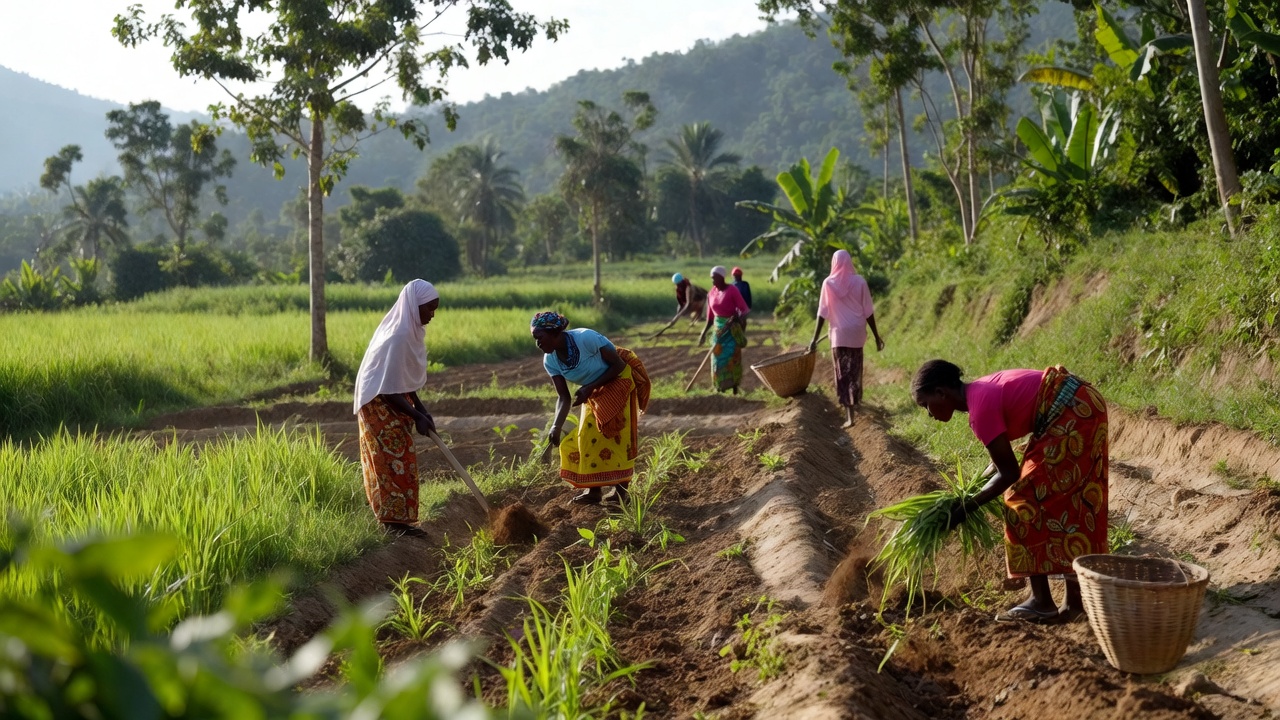
Supporting women in rural Sierra Leone to secure their livelihoods through agriculture is part of the mission of most national Non-governmental Organizations that are dedicated to children, youth and women. Imagine organizations supporting women farmers, only to discover they lack the very foundation of farming: land. This harsh reality struck organisations like Action for Advocacy and Development (AAD)-Sierra Leone head-on while empowering rural communities in northwestern Sierra Leone. Despite providing seeds and tools, women faced a crucial barrier – limited access, ownership, control and inheritance of land. Women disproportionately shouldered household responsibilities, yet often receive meagre resources from harvests controlled by men. This power imbalance extends to land ownership, control and inheritance deeply rooted in cultural norms that favour male inheritance. Witnessing a woman denied control of her family land, despite being the eldest sibling, fueled our determination to advocate for change.
AAD-SL’s Mission: Advocacy, Education, and Community Engagement
AAD-SL has been taking action by embarking on a mission to: raise awareness through workshops and discussions, educate community members about women’s land rights; and empower women which equipping them with knowledge and skills to negotiate for land access, ownership, control and inheritance within their families; engage traditional authorities to collaborate with leaders to promote fair and equitable land distribution.
Climate Change, Land Degradation, and the Reality in Bombali and Karene
Working in Bombali and Karene districts, often described as one of the world’s worst districts for climate change due to their landlocked status. But what people are experiencing here mirrors a global reality, a reality where timber logging and sand mining, a seemingly routine activity, threatens the very foundation of our environment. These trees, once guardians against floods, are disappearing, leaving communities vulnerable. That is why climate adaptation is not just another project element for AAD SL and our donors; it’s the core. Engagement with communities on smart agriculture and sustainable land use has been a mantra in empowering communities to fight climate change from the ground up.
Beyond Access, Towards Sustainability
The work on women’s land rights does not stop at access. There has been an effort to promote agroecological farming, a sustainable system that minimizes environmental impact. One such innovation is briquette making. Imagine transforming discarded palm shells, cassava peels, and rice straw into clean-burning fuel. That’s exactly what communities are doing, reducing reliance on wood and protecting forests. The eco-stoves further minimize wood use for cooking, saving families money and minimizing environmental impact. Most of the technology used might seem localized, but its impact resonates globally. Climate change recognises no borders. While Bombali and Karene districts may face unique challenges, their story mirrors countless others.
Agroecological Innovations for Environmental Protection and Livelihoods
The resilience and resourcefulness of these communities inspire us. Protecting soil health and promoting natural ecological regeneration and assisting natural regeneration. Replacing mono-cropping with mixed cropping to combat soil depletion and replacing harmful fertilizers with homemade liquid organic fertilisers made from agricultural waste. These are a few initiatives that have yielded dividends for women in both the short-term and long-term sustainability approaches in the various communities.
Sustainable Farming Practices for Long-Term Soil and Food Security
It’s important to discourage mono-cropping, except in extreme cases, and encourage rotational cropping to ensure long-term soil health. Also, it’s vital to promote organic alternatives for a healthier environment and people. Every sapling planted is a step towards a greener future like exploring environmental friendly and sustainable solutions like briquettes and eco-stoves. As a national non-governmental organization, even small actions in Bombali and Karene districts can have a ripple effect across the world.
Stories of Impact
In the Safrakoh Limba-Bombali district, a woman’s uncle seized her inherited land after her father’s death. During a training session on land rights, a woman shared her story. This triggered a powerful realization in her mother, who had been influenced by the uncle’s claims. The mother apologized and returned the land to her daughter. In another community, a young man claimed sole ownership of inherited land, denying his elder sister access. We challenged his perception by highlighting his willingness to defend his sister from trespassers. This sparked self-reflection, eventually leading him to acknowledge his sister’s rights.
Changing Mindsets and Advancing Women’s Land Rights
Many communities lack of awareness about women’s land rights stems from the cultural beliefs and misconception that men hold sole responsibility and authority. Our work is changing this narrative, paving the way for equitable land access, ownership, control and inheritance through various means, including gifts, purchases, and communal agreements.
A Call to Action for a Resilient and Equitable Future
By advocating for women’s empowerment and promoting sustainable practices like agroecological farming, we can cultivate a future where rural communities in Sierra Leone truly thrive. Together, let’s turn the tide on climate change. This blog is not just a story, it’s an invitation to join the fight. Share your thoughts, and your solutions, and together, let’s build a more resilient future for the Bombali and Karene districts in Sierra Leone, and the world.